3 Nov 2026
Matching Poker Gear to Player Mobility Needs: Designs That Keep Full Sets Functional During Extended Travel Periods
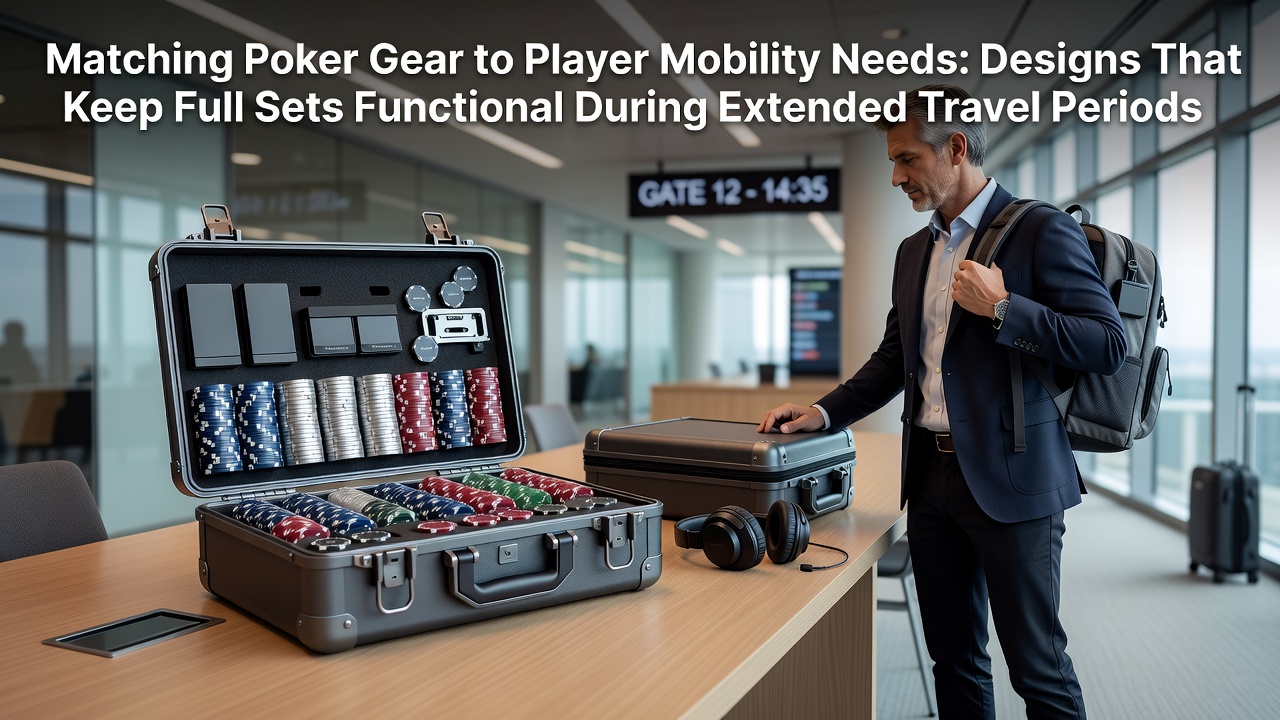
Players who move between tournament circuits and regional events often transport complete poker kits across multiple destinations, and manufacturers have responded with integrated designs that preserve component alignment and operational integrity throughout long journeys; these systems combine reinforced frames, adjustable compartments, and climate-resistant shells to address vibration, temperature shifts, and repeated handling without compromising card flow, dice consistency, or mat surface integrity.
Core Mobility Challenges in Tournament Circuits
Extended travel periods expose poker equipment to repeated loading cycles in aircraft holds, vehicle trunks, and venue storage areas, where shifting weights and pressure points can misalign edges or degrade protective coatings, and data collected by logistics teams at major circuits shows that sets lacking integrated stabilizers experience higher rates of surface wear during multi-week tours; observers note that November 2026 schedules, which include overlapping international stops through late fall, intensify these demands as participants consolidate gear into single carry solutions rather than multiple bags.
Structural Elements That Maintain Set Functionality
Design teams incorporate telescoping handles paired with inline skate wheels rated for uneven surfaces, while internal suspension frames cradle stacked components to prevent lateral movement during transit, and modular inserts allow users to reconfigure layouts for specific loadouts without tools; such configurations keep mats flat, shuffler mechanisms seated, and accessory trays secured so that setup time at each destination remains consistent with home conditions.
Material Specifications for Durability Under Motion
High-density polyethylene shells paired with ballistic nylon reinforcements resist abrasion from conveyor belts and baggage handlers, whereas internal layers of closed-cell foam absorb impact forces that would otherwise transfer to delicate edges, and independent testing by the Canadian Standards Association confirms that these layered constructions maintain dimensional stability across temperature ranges encountered in both tropical and temperate routes; manufacturers further integrate moisture-wicking liners that protect against condensation formed during altitude changes.

Component Integration and Load Distribution
Full sets function best when weight distribution follows a low-center design that places heavier bases near wheel axles, allowing lighter accessories to nest above without creating torque on zippers or latches, and engineers achieve this through tiered shelving that locks into place via quarter-turn fasteners; such arrangements reduce strain on individual pieces while permitting quick access to any single item during security screenings or venue checks.
Regulatory and Industry Benchmarks
Compliance with international carry-on dimensions remains essential for professionals who avoid checked-baggage fees and potential delays, and guidelines published by the Transportation Security Administration outline maximum linear measurements that many current poker travel cases now meet through collapsible side panels; meanwhile, research from the University of Melbourne's Department of Mechanical Engineering highlights how reinforced corner caps and recessed hardware minimize snag points that could catch during rapid movement through crowded terminals.
Adaptations for Regional Travel Conditions
Routes crossing arid zones require dust seals around all closures, while humid corridors benefit from vented compartments that equalize pressure without admitting moisture, and suppliers in the Asia-Pacific region have introduced quick-dry exterior coatings tested under monsoon conditions to preserve both appearance and structural integrity; these regional modifications integrate seamlessly with core frames so that a single base model serves multiple climates when fitted with interchangeable seals.
Conclusion
Effective matching of poker gear to mobility requirements rests on coordinated engineering that treats the entire set as a single dynamic system rather than isolated pieces, and continued refinement of suspension, shell, and distribution features supports uninterrupted performance across expanding tournament calendars.